
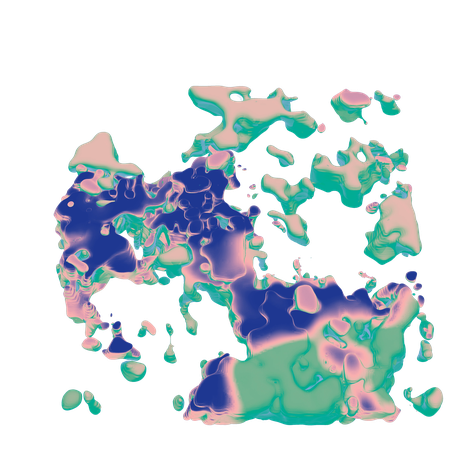
Spatial transcriptomics with R/Bioconductor
Dates
14-18 December 2026
To foster international participation, this course will be held online
Course overview
Spatial transcriptomics is transforming our ability to study gene expression within its native tissue context. By combining high-resolution imaging, sequencing-based technologies, and
computational analysis, researchers can now map transcripts, identify cellular niches, and characterize cell–cell interactions directly in space.
This 5-day course provides a comprehensive introduction to the theory and practice of spatial transcriptomics data analysis. The program starts with an essential conceptual foundation and
progressively transitions into hands-on, guided computational labs. Participants will learn how to process, integrate, and explore spatial and single-cell omics data using state-of-the-art tools
in R and Bioconductor.
The final day includes a project-design workshop and an interactive hackathon, where participants work in teams to analyze their own (or publicly available) datasets, applying the methods learned
throughout the week.
By the end of the course, students will have a solid theoretical understanding of spatial transcriptomics and practical experience performing full analysis workflows—preparing them to apply these
methods directly in their research projects.
Target Audience
This course is intended for researchers, graduate students, and professionals working in bioinformatics, computational biology, genomics, or related fields who want to expand into spatial
transcriptomics analysis.
The course is designed for advanced students and researchers with a basic proficiency in R and Bioconductor.
Learning outcomes
By the end of this course, participants will be able to:
- Understand the key concepts, technologies, and applications of spatial transcriptomics.
- Process, explore, and analyze spatial omics data using R/Bioconductor, including cell segmentation, quality control, spatial mapping, and integration with single-cell datasets.
- Perform downstream spatial analyses such as niche characterization and cell–cell communication.
- Design and execute spatial transcriptomics projects, apply workflows to real datasets, and interpret and communicate spatial biological insights.
Session content
Day 1 The WHYs and the HOWs of spatial transcriptomics - 2-6 PM Berlin time
Intro
Lecture 1 The spatial dimension
Lecture 2 Mapping transcripts in space
Lab 1 Computational set up & raw spatial data
Day 2 From transcripts to single cells- 2-6 PM Berlin time
Lecture 3 Imaging-based spatial data analysis
Lecture 4 Sequencing-based spatial data analysis
Lab 2 Cell segmentation & interactive data exploration
Day 3 Spatial mapping of cell types and cell states- 2-6 PM Berlin time
Lecture 5 Shared downstream data processing and QC
Lecture 6 Leveraging paired single-cell and spatial omics
Lab 3 Single-cell resolved spatial analyses
Day 4 The cellular niche- 2-6 PM Berlin time
Lecture 7 Cells live and interact in multicellular niches
Lab 4 Neighbourhood and niche analysis
Lab 5 Spatial cell-cell communication analysis
Day 5 A special future- 2-6 PM Berlin time
Lecture 8 Towards 4D spatial multiomics
Workshop: Design your own spatial project
Hackathon: Start digging in your spatial data
Conclusion
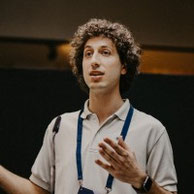
Instructor
Berlin Institute of Medical Systems Biology, Max Delbrück Center (MDC-BIMSB)
COst overview
what people say about this course
"Tancredi was a really good instructor! Thorough, good at explaining things, patient with questions, and fun! Also I think the online format was better, than I expected. "
"Overall, I'm really happy with this course. I learnt so much, and at the same time, it was genuinely fun. Tancredi did a wonderful job, always troubleshooting, adapting the course in
real-time to our questions and needs, and finding solutions on the spot. Everyone involved, organisers and participants, was super nice and helpful, creating a fun and supportive
atmosphere."
related courses
- Developing R/Bioconductor packages - ONLINE, 6-10 July
- Spatial Omics Data Analysis: From Raw Data to AI Insights - ONLINE, 14-16 September
- Machine Learning for Multi-Omics Integration - ONLINE, 21-23 September
- Network Analysis in System Biology with R/Bioconductor - ONLINE, 5-8 October
- RNA-seq analysis with R/Bioconductor - ONLINE, 9-18 November
- Single-cell RNAseq with R/Bioconductor - ONLINE, 16-20 November
- Exploring and Visualizing Omics Data - ONLINE, 25-26 November
Cancellation Policy:
> 30 days before the start date = 30% cancellation fee
< 30 days before the start date= No Refund.
Physalia-courses cannot be held responsible for any travel fees, accommodation or other expenses incurred to you as a result of the cancellation.