
Multivariate data analysis with R and vegan
Dates
4-7 May 2026
To foster international participation, this course will be held online
Course overview
The R statistical language has enjoyed wide and rapid adoption by many ecologists, and is used across many ecological subdisciplines for statistical analyses and the production of
publication-quality figures. For community ecologists using R, one of the most-used, and useful, add-on packages is vegan, which provides a wide range of functionality covering inter alia
ordination, diversity analysis, and ecological simulation. This course offers participants a practical introduction to some of the most useful functions available within vegan. We will focus on
the use of ordination methods and on the use of restricted permutations to test a range of experimental designs.
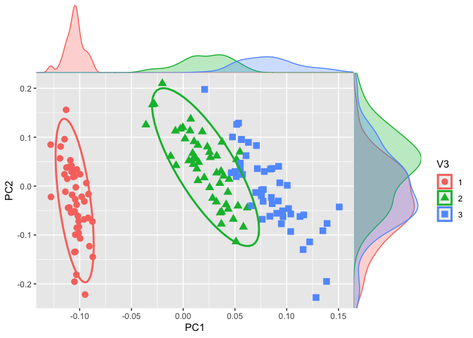
In particular, we discuss when and how to use multivariate methods including unconstrained and constrained ordination (CCA, RDA, Constrained PCoA), as well as between-group tests such as
PERMANOVA. We will cover concepts such as design- and model-based permutations and the exchangeability of samples in tests. We will also discuss the use of vegan to go beyond simply fitting a
constrained ordination model, to diagnostics, plotting, etc.
New for the May 2026 running of the course is an expansion of the content on applying the methods to high-throughput data such as shotgun sequencing (metabarcoding) and metagenomics.
Target audience and assumed background
This course is suitable for PhD students (including senior thesis-based masters students) and researchers working with multivariate data sets in biology (inter alia ecology, animal science
agriculture, microbial ecology/microbiology), with limited statistical knowledge but a willingness to learn more.
Participants should be familiar with RStudio and have some fluency in programming R code, including being able to import, manipulate (e.g. modify variables) and visualise data. There will be a
mix of lectures, and hands-on practical exercises throughout the course.
Learning outcomes
- Have a good introductory understanding of the main approaches used in the analysis of multivariate data sets,
- Be able to choose an appropriate method to use to analyse a data set
- Understand how to use restricted permutation tests with constrained ordination methods to test the effects of predictor variables or experimental treatments,
- Be able to use the R statistical software to analyse multivariate data
Program
Sessions from 14:00 to 20:00 (Berlin time). From Tuesday to Thursday, the first 30-60 minutes will be dedicated to Q&A and working through practical exercises or students’ own analyses over Slack and Zoom. Sessions will interweave mix lectures, in-class discussion/ Q&A, and practical exercises.
Monday– Classes from 2-8 PM Berlin time
An introduction to multivariate data and their analysis
Dissimilarity and dissimilarity coefficients
Transformations (e.g. for high-throughput biological data)
Tuesday– Classes from 2-8 PM Berlin time
Unconstrained ordination
• Principal Components Analysis
• Correspondence Analysis
• Principal Coordinates Analysis
• Non/metric Multidimensional Analysis (NMDS)
Wednesday– Classes from 2-8 PM Berlin time
Constrained Ordination
• Redundancy Analysis
• Canonical Correspondence Analysis
• Distance-based Redundancy Analysis
• PERMANOVA (adonis()) and PERMDISP (betadisper())
Thursday– Classes from 2-8 PM Berlin time
Statistical inference for ordination models
• Statistical testing with permutation tests
• Restricted permutation tests

Cost overview
what people say about this course - 5th edition
"I thank you for amazing course and for giving me more information and knowledge to implement on my data. I found it very useful!"
"Congratulations to you all! Gavin and Physalia!"
Should you have any further questions, please send an email to [email protected]
Cancellation Policy:
> 30 days before the start date = 30% cancellation fee
< 30 days before the start date= No Refund.
Physalia-courses cannot be held responsible for any travel fees, accommodation or other expenses incurred to you as a result of the cancellation.