
Machine Learning for Bio-imaging
Dates
10-12 March 2026
To foster international participation, this course will be held online
Course overview
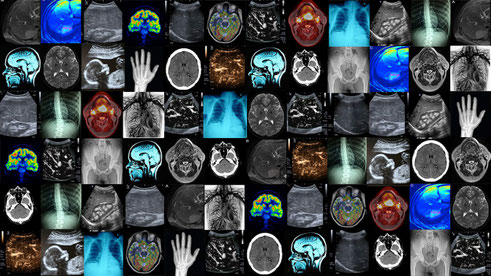
This course introduces machine learning and deep learning techniques for bio-imaging analysis. Over three days, participants will learn the fundamental concepts of bioimage analysis, explore modern machine learning workflows, and gain hands-on experience applying convolutional neural networks (CNNs) to real biological imaging problems.
The program combines concise lectures with practical coding sessions in Python, focusing on image segmentation and image classification tasks commonly encountered in biomedical research. Participants will work with real microscopy and medical imaging datasets, learning how to prepare data, handle class imbalance, apply data augmentation strategies, and interpret deep learning models using explainability tools such as Class Activation Maps (CAMs).
All exercises will be performed using open-source Python libraries and reproducible workflows.
Target Audience
Graduate students (MSc, PhD), postdoctoral researchers, and early-career scientists working with biological or biomedical images who want to apply machine learning techniques to their data.
Prerequisites
-
Intermediate experience with Python
-
Basic familiarity with numerical data analysis
-
No prior experience with deep learning is required
Learning outcomes
By the end of this course, participants will be able to:
-
Describe the fundamentals of bioimage analysis and common imaging modalities
-
Understand core concepts of machine learning and deep learning in the context of bio-imaging
-
Prepare image datasets for machine learning, including normalization, annotation, and augmentation
-
Design and train convolutional neural networks for image segmentation
-
Apply deep learning models for image classification
-
Handle imbalanced biological datasets using appropriate strategies
-
Interpret deep learning predictions using explainability methods such as CAMs
-
Build reproducible bioimage analysis workflows in Python
Session content
Live sessions will be held daily from 14:00 to 19:00 CET.
Day1, 10 March
Introduction to bioimage analysis and machine learning
-
14:00–14:15 — Welcome and course practicalities
-
14:15–15:00 — Introduction to bioimage analysis
-
Biological imaging modalities
-
Typical bioimage analysis tasks and challenges
-
-
15:00–15:45 — Introduction to machine learning for images
-
From classical image processing to learning-based methods
-
Overview of supervised learning for images
-
-
15:45–16:00 — Break
-
16:00–17:00 — Introduction to deep learning for bio-imaging
-
Neural networks and CNN fundamentals
-
Training workflows and evaluation metrics
-
-
17:00–18:30 — Hands-on: Exploring bioimage datasets and basic preprocessing in Python
-
18:30–19:00 — Q&A and discussion
Day2, 11 March
Image segmentation using deep learning
-
14:00–14:15 — Recap
-
14:15–15:00 — Image segmentation in bio-imaging
-
Segmentation tasks in biological images
-
Challenges: noise, variability, and annotation
-
-
15:00–15:45 — Classical and deep learning–based segmentation methods
-
Thresholding and Otsu’s method
-
Convolutional neural networks and U-Net architectures
-
-
15:45–16:00 — Break
-
16:00–17:00 — Hands-on: Data preparation for image segmentation
-
Annotation strategies and ground truth generation
-
Data augmentation for microscopy images
-
-
17:00–18:30 — Hands-on: CNN-based image segmentation in Python
-
Dataset preparation and augmentation
-
Training and evaluating a U-Net model
-
-
18:30–19:00 — Q&A and discussion
Day3, 12 March
Deep learning for bioimage classification and interpretability
-
14:00–14:15 — Recap
-
14:15–15:00 — Image and object classification in biomedical imaging
-
Classification pipelines and evaluation metrics
-
Use case: retinal image classification
-
-
15:00–15:45 — Challenges in biomedical image classification
-
Class imbalance and dataset bias
-
Preprocessing and augmentation strategies
-
-
15:45–16:00 — Break
-
16:00–17:00 — Hands-on: Deep learning models for image classification
-
Custom CNNs and transfer learning
-
Model selection and performance comparison
-
-
17:00–18:15 — Hands-on: Training deep learning classifiers in Python
-
Handling imbalanced datasets
-
Model evaluation and validation
-
-
18:15–18:30 — Hands-on: Model interpretability
-
Class Activation Maps (CAMs) and visual explanation of predictions
-
-
18:30–19:00 — Final Q&A and course wrap-up
Instructor
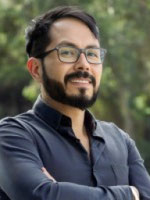
Professor and Researcher in Bioimage Analysis and Machine Learning expertise in computational bio-imaging, deep learning, and quantitative analysis of biological systems
COst overview

related courses
1- Introduction to Python for biologists - ONLINE, 9-12 February
2- Machine Learning with R - ONLINE, 16-20 February
3 - Advanced Python for Data Science and Bioinformatics - ONLINE, 23-26 March
Cancellation Policy:
> 30 days before the start date = 30% cancellation fee
< 30 days before the start date= No Refund.
Physalia-courses cannot be held responsible for any travel fees, accommodation or other expenses incurred to you as a result of the cancellation.