
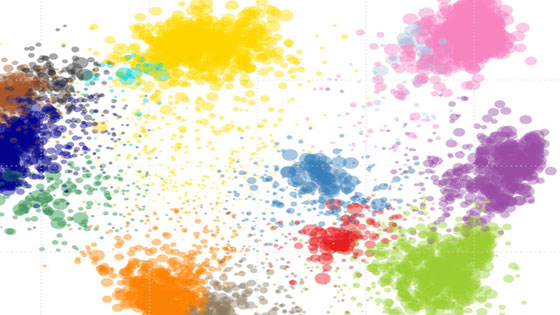
Spatial Proteomics Data Analysis in R/Bioconductor: From Mass Spectrometry to Subcellular Maps
Dates
10-12 November 2026
To foster international participation, this course will be held online
Course overview
This hands-on course introduces the analysis of subcellular spatial proteomics data generated by mass spectrometry (MS)-based protein profiling of biochemically fractionated cells. Participants
will learn how to analyse and interpret subcellular proteomics datasets using open-source R/Bioconductor within reproducible computational workflows. Through a guided practical example, the
course covers essential steps in data processing, quality control, annotation, and protein localisation prediction using modern machine learning methods to generate comprehensive subcellular maps
of the cell.
Note: This course does not cover the analysis of data generated from spatial imaging or antibody-based technologies.
Intended audience
This course is designed for proteomics researchers, bioinformaticians, and data analysts seeking practical experience in analysing MS-based subcellular spatial proteomics data using R and Bioconductor. Prior experience with mass spectrometry or proteomics is helpful but not required, as the course begins with an introduction to a typical MS-based subcellular profiling experiment. Participants should have a working knowledge of R, including basic syntax, common functions, and core data structures such as vectors, matrices, and data frames. Familiarity with Bioconductor data classes and tidyverse workflows is advantageous, but not essential.
Session content
Sessions are from 12:00 to 16:00 (Berlin time, Tuesday-Friday) and will consist of lectures and hands-on practical exercises using RStudio.
Tuesday - Classes from 12-4 pm Berlin time
• Introduction to MS-based subcellular spatial proteomics
• Differences in data formats from the third-party identification search
• An introduction to QFeatures infrastructure for MS data
• Data import and processing including filtering, normalisation and aggregation from precursors/peptides to proteins
Wednesday - Classes from 12-4 pm Berlin time
• Exploratory data analysis and visualisation
• Dimensionality reduction and clustering methods
• Quality control metrics and assessment
• Introduction to protein annotation and marker definition
Thursday - Classes from 12-4 pm Berlin time
• Machine learning approaches for localisation prediction
• Model training, evaluation, and confidence assessment
• Assigning high-confidence protein localisations
• Generating comprehensive spatial maps of the cell
Instructor

COst overview
Cancellation Policy:
> 30 days before the start date = 30% cancellation fee
< 30 days before the start date= No Refund.
Physalia-courses cannot be held responsible for any travel fees, accommodation or other expenses incurred to you as a result of the cancellation.