

Conservation Genomics
Dates
ONLINE, 7-10 April 2026
To foster international participation, this course will be held online
Overview
This course will introduce attendees to how the tools of population genomics can be used to inform conservation. The instructors will guide students through study design, genomic data collection
methods, handling of raw genomic data, and SNP filtering to produce a dataset. Then, we will work through a suite of analyses looking at population structure, local adaptation, effective
population size, inbreeding and relatedness. We will provide background on the theory and application of these analyses, and then run hands-on exercises running analyses and interpreting results.
Through hands-on exercises, the course will teach basic bioinformatics skills and how to manipulate, visualize and interpret genomic data and patterns in a conservation related context.
For participants interested in more advanced applications of genomics to conservation decision-making, the Advanced
Conservation course covers interpretation of genomic metrics, methodological limitations, and translating results into management strategies
Target audience and assumed background
The course is aimed at graduate students and researchers who are interested in using genomic tools to address issues in conservation. Participants should have some basic background in evolution
and population genetics. Previous experience in UNIX-based command line and R is required. Hands-on exercises will be run in a Linux environment on remote servers and data analysis and
visualization will be run in R using RStudio.
Teaching format
The course will be delivered fully online over 4 half-day (5 hour) sessions, with a combination of lectures and practical exercises that will be live (synchronous). Discussions among participants
and with the instructors on concepts and data analyses will be possible through video conferencing and a dedicated Slack workspace.
Learning outcomes
1. Study design and genomic data collection methods
2. Handling genomic data from raw reads to a filtered dataset of SNP genotypes
3. Assessing population structure using multiple methods
4. Searching for signals of adaptation
5. Estimating effective population size
6. Calculating inbreeding
7. Estimating relatedness
Program
Day1 – Classes from 2-8 pm Berlin time
Part 1 – Introduction to genomic data (E. Jensen)
In this first session we will have an opportunity to get to know each other and the variety of research interests in the
group. We will also explore different aspects of a population genetic study, including best practices around sampling, quality of DNA samples, and the various methods to generate genetic data for
your species of interest. Finally you will be introduced to the various file types you will encounter when conducting studies that use NGS to generate genotype data.
Lecture breakdown
• Introduce yourself and your research interests
• Discuss study design: DNA sample sources, quality of DNA, sample sizes
• Discuss genetic data collection methods: whole genome sequencing, capture (exon or mtDNA), RADseq, SNP panel
• Introduce various file types (fastq, fasta, SAM/BAM, vcf, BED, program specific inputs)
Practical
• Explore fastq sequence files typically generated by sequencing software
• Check quality of fastq files using FastQC
• Trim data to remove adapters, poor quality data
Part 2 – Alphabet soup (E. Jensen)
In this second half of day one you will learn how to assemble your raw sequence data to a reference genome, and learn how to assess quality of
your assembly. You will be introduced to de novo approaches for studies where your species does not have a reference genome available. Finally, you will learn the basics of SNP genotype calling,
and haplotype calling.
Lecture breakdown
• Accessing reference genomes, understanding their quality, “in-group” reference bais
• General introduction to de novo approaches
• General introduction to the idea of SNP calling
Practical
• Examine the files associated with a reference genome, and index it
• Assemble reads to the genome using BWA
• Check the quality of assembly, filter the data using BAM
• Call SNPs using BCFtools mpileup/call, generate a VCF output file of genotypes

Instructors
Dr. Evelyn L. Jensen - Lecturer in Molecular Ecology, Newcastle University, UK
Dr. Jensen is a conservation geneticist and molecular ecologist, with research spanning the globe. Current research focuses on the evolution and conservation of Galapagos giant tortoises, population genomics of South American kelp and UK goats, metabarcoding plankton and sedimentary DNA (among other things :))
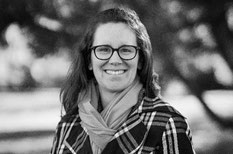
Dr. Catherine Cullingham - Assistant Professor, Carleton University, CA
Dr. Cullingham is a molecular ecologist with broad research interests spanning wildlife conservation, pathogen and disease spread, and how species ranges, and interactions are changing with climate change. Currently her lab is working on the genomics of pine trees, mountain pine beetles, mosquito borne diseases and a few other side projects.
Teaching assistant
Caroline Grela - PHD Student
Caroline is a graduate student in the Cullingham lab at Carleton University. Her academic interests include population genetics, bioinformatics, and ecology. Her research focuses on a genomic analysis of the Mountain Pine Beetle in its range expansion, as a part of the TriA-FoR project.
COst overview
Conservation Genomics
Intro Conservation Genomics + Advanced Conservation Genomics
480 €
800 €
what people say about this course - 5th edition
related courses
1 - Population Genomics - ONLINE, 16-20 March
2- Deep Learning in Population Genomics & Phylogeography - ONLINE, 23-26 March
3 - Introduction to GWAS - ONLINE, 18-22 May
Cancellation Policy:
> 30 days before the start date = 30% cancellation fee
< 30 days before the start date= No Refund.
Physalia-courses cannot be held responsible for any travel fees, accommodation or other expenses incurred to you as a result of the cancellation.