
Fundamentals of Biostatistics with R
Dates
13-17 April 2026
To foster international participation, this course will be held online
Course overview
The Fundamentals of Biostatistics with R course provides a practical introduction to the core statistical concepts and methods used in medical and biomedical research. Through a hands-on approach, participants will learn how to explore, analyze, and interpret data using R. The course emphasizes understanding statistical principles, choosing appropriate tests, and communicating results effectively for clinical and research applications.
Learning outcomes
By the end of this course, participants will be able to:
-
Understand the role of statistics in clinical and biomedical research.
-
Summarize, visualize, and explore medical datasets using R.
-
Apply common statistical methods including t-tests, ANOVA, regression, and survival analysis.
-
Correctly interpret statistical results, effect sizes, and confidence intervals.
-
Perform reproducible data analysis and reporting following medical publication standards.
Session content
Day 1 — Introduction to Medical Statistics & Data Exploration (2-7 PM Berlin time)
-
Role of statistics in clinical and epidemiological research
-
Variable types: nominal, ordinal, interval, ratio
-
Data sources and measurement errors
-
Descriptive statistics: mean, median, SD, IQR
-
Data visualization: histograms, boxplots, bar charts, etc.
-
Hands-on: Importing datasets, summarizing, and plotting data in R
Day 2 — Probability, Sampling & Confidence Intervals (2-7 PM Berlin time)
-
Probability concepts and medical test interpretation (sensitivity, specificity)
-
Sampling methods and sample size basics
-
Normal distribution and z-scores, Poisson and Binomial distributions
-
Confidence intervals for means and proportions
Day 3 — Hypothesis Testing & Comparison of Groups (2-7 PM Berlin time)
-
Concept of statistical significance and p-values
-
t-tests (independent, paired)
-
One-way ANOVA and post-hoc tests
-
Non-parametric equivalents (Mann–Whitney, Kruskal–Wallis)
-
Effect size and clinical significance
Day 4 — Categorical Data Analysis & Linear Regression (2-7 PM Berlin time)
-
Contingency tables, relative risk, and odds ratio
-
Chi-square test and Fisher’s exact test
-
Correlation: Pearson vs. Spearman
-
Simple and multiple linear regression: model building and interpretation
-
Confounding and interpretation pitfalls
Day 5 — Logistic Regression Models & Survival Analysis (2-7 PM Berlin time)
-
Simple and multiple logistic regression for binary outcomes
-
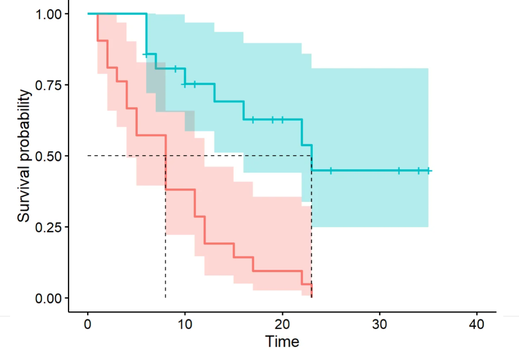
Introduction to survival analysis in medical research
-
Writing statistical methods and results sections
-
Reproducible workflows and data integrity
Instructor
Prof. Eliana Ibrahimi
She is a biostatistician with extensive experience in applying statistical methods to medical and biomedical research. She has worked on numerous projects involving clinical and epidemiological
data analysis and is skilled in using R for reproducible and transparent data workflows. Eliana is passionate about helping researchers develop a solid understanding of biostatistical principles
and their practical applications in real-world medical studies.

COst overview
related courses
1- Dealing with messy data in R - ONLINE, 8-10 April
2- Handling Missing Data in R - ONLINE, 22-24 April
3 - Beyond Beginner R - ONLINE, 1-4 June
4 - Introduction to R Shiny - ONLINE, 9-10 June
Cancellation Policy:
> 30 days before the start date = 30% cancellation fee
< 30 days before the start date= No Refund.
Physalia-courses cannot be held responsible for any travel fees, accommodation or other expenses incurred to you as a result of the cancellation.