
Introduction to RNA sequencing data analysis with R/Bioconductor
Dates
9, 11, 13, 16, 17, 18 November 2026
To foster international participation, this course will be held online
overview
This course will provide biologists and bioinformaticians with practical statistical analysis skills to perform rigorous analysis of high-throughput genomic data. The course assumes basic familiarity with genomics and with R programming, but does not assume prior statistical training. It covers the statistical concepts necessary to analyze genomic and transcriptomic high-throughput data generated by next-generation sequencing, including: hypothesis testing, data visualization, genomic region analysis, differential expression analysis, and gene set analysis.

Preparation

Come to the first class with the following installed:
● R and Bioconductor: www.bioconductor.org/install
● R Studio: https://www.rstudio.com/products/rstudio/download3/
Textbook
● Modern Statistics for Modern Biology
(by Holmes and Huber)
● The Bioconductor 2018 Workshop collection
program
** Day1 – Introduction (Nov 9, 3-6 PM, Berlin time)
- learn how to import text (e.g., 'comma-separated values') files into R,
- learn how to perform manipulations of R data frames,
- learn how to apply R functions for statistical analysis and visualization,
- learn how to use R packages to extend basic functionality
- learn to create high-quality graphics with base R plot & ggplot2
** Day2 – Hypothesis testing (Nov 11, 3-6 PM, Berlin time)
- get familiar with the statistical machinery of hypothesis testing, its vocabulary, its purpose, and its strengths and limitations
- learn how to conduct frequently used tests in R and how to interpret the results
** Day3 - Introduction to Bioconductor (Nov 13, 3-6 PM, Berlin time)
- learn how to use rtracklayer::import() to read genomic files
(e.g. BED, GTF, VCF, FASTA) into Bioconductor objects
- learn how to work with genomic region data (exons, genes, ChIP peaks, copy number variants, …) in Bioconductor
- learn how to find regions of overlap between experimentally-derived genomic regions (eg. CNV coordinates provided as BED) and functional genomic regions (eg. gene coordinates provided as GTF)
** Day4 - RNA-seq data analysis (Nov 16, 3-6 PM, Berlin time)
- get familiar with core concepts and key terminology of RNA-seq analysis
- understand the essential concepts of read mapping, counts computation, normalization and differential expression analysis and get to know selected R/Bioconductor packages for that purpose
(Rsubread, EDASeq, edgeR, DESeq2)
** Day5 - Differential expression analysis (Nov 17, 3-6 PM, Berlin time)
- understand what multiple testing means
- understand the false discovery rate and how to apply it to a vector of p-values in R
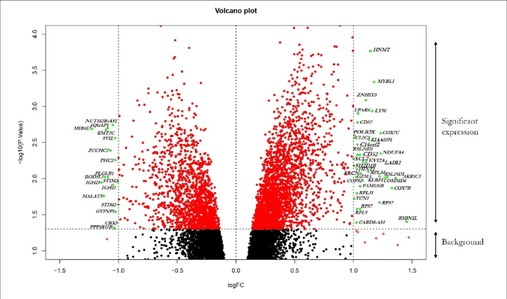
- learn how to conduct a differential expression analysis with DESeq2 and how to interpret the results
- understand similarities and differences to differential expression analysis with edgeR or limma/voom
** Day6 - Gene set analysis (Nov 18, 3-6 PM, Berlin time)
- understand what are gene sets and pathways, and what are major resources for obtaining them (GO / KEGG)
- understand the basic statistical concepts underlying GO/KEGG overrepresentation analysis
- learn how to perform permutation-based gene set enrichment analysis using the EnrichmentBrowser package

Cost overview
what people say about this course
- "I really enjoyed the course. The instructor has extensive experience and answered my questions in depth."
- "The course helped me understand the overall workflow of RNA-seq analysis and how to use Bioconductor tools effectively. The hands-on sessions were especially useful for connecting theory with practice."
- "I enjoyed it very much. The introduction to core Bioconductor data structures and workflows was particularly valuable."
related courses
1 - RNAseq for beginners - ONLINE, 20th-28th of May
2 -Developing R/Bioconductor packages - ONLINE, 6-10 July
3 - MicroRNA annotation and small RNA-Seq Analysis - ONLINE, 6-9 October
4- Single-cell RNAseq with R/Bioconductor - ONLINE, 16-20 November
5 - Exploring and Visualizing Omics Data with iSEE - 25-26 November
Cancellation Policy:
> 30 days before the start date = 30% cancellation fee
< 30 days before the start date= No Refund.
Physalia-courses cannot be held responsible for any travel fees, accommodation or other expenses incurred to you as a result of the cancellation.